The Hidden Cost of No-Code Solutions
No-code platforms promise the world, but there’s always a catch. Let’s talk about what happens when you hit their limits.

The Hidden Cost of No-Code Solutions
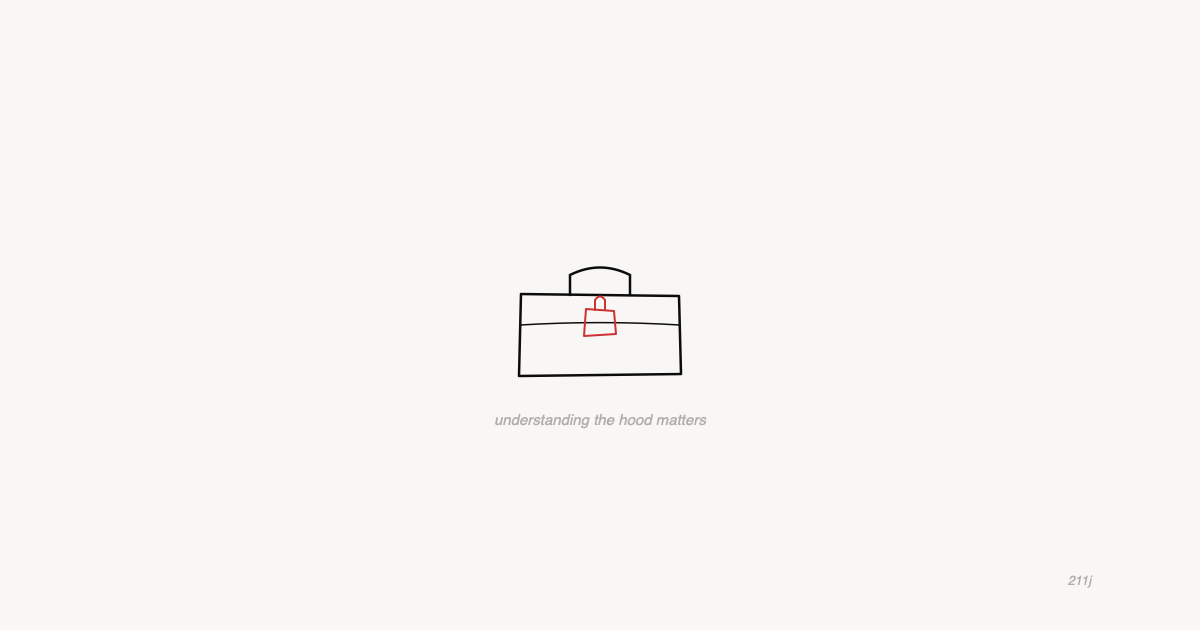
I should probably hate no-code tools. I’m a developer. I spent years learning to write actual code. The whole thing started with an HTML4 for Dummies book - though I never really read it. I got one line in, the part that says to wrap “hello world” in an <h1> tag, save it as a file, and open it in a browser. I did that, watched it render, and it was like a hit of drugs - that moment when I realized I could make things appear on a screen by typing words into a file. Then I closed the book and taught myself the rest from Google, one search at a time. I went from that to building my first blog in GoDaddy’s terrible little modal editor that didn’t even have line numbers. I reverse-engineered WordPress source code to understand how hooks worked. I did it the hard way, on purpose, because understanding what’s happening under the hood is the whole point.
So yeah, you’d expect me to be the “no-code is for amateurs” guy. I’m not. But I’m not the “no-code is the future” guy either. My actual opinion is more annoying than both of those positions.
I Get the Appeal
I’m self-taught. I dropped out of high school. I got my GED. Before I was a developer, I spent 11 years in hospitality. I know what it’s like to have an idea and not have the skills to build it. That gap between “I know what I want” and “I can make it exist” is brutal, and no-code tools close that gap for a lot of people.
If you’re a small business owner who needs a website and you build it on Squarespace, I’m not going to look down on you. You got something up. It works. It looks decent. You can update it yourself without calling a developer every time you want to change a phone number. That has real value.
Where things get complicated is when people try to build something that goes beyond what the no-code tool was designed for. And they always do. Because projects grow. Requirements change. The thing that started as “I just need a simple website” becomes “I need a booking system with custom pricing logic and email automation and an API integration with our CRM.” And suddenly you’re trying to make Wix do backflips.
The Costs Nobody Talks About
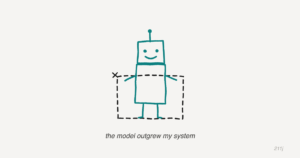
The customization ceiling. Every no-code platform has one. You’re fine until you hit it, and then you’re stuck. You can’t open the hood because there is no hood. The code is the platform’s code, running on the platform’s servers, doing what the platform decided it should do. When your business needs something the platform doesn’t support, your options are: find a workaround (usually ugly), pay for a third-party integration (usually expensive), or start over with real code (definitely expensive).
The migration tax. This is the big one. Try moving a Webflow site to WordPress. Try exporting your Bubble app to a standard server. Try taking your Squarespace design and hosting it yourself. You can’t. Or you can, but it’s essentially a rebuild. Your “no-code” solution created a dependency on a specific platform, and breaking that dependency costs real money and real time. I’ve had freelance clients come to me after years on a no-code platform, and the conversation is always the same: “We need to move, and we need everything to work the same way.” The answer is always: “That’s going to be a project.”
The performance overhead. No-code tools generate code. That code is, to put it diplomatically, not optimized for your specific use case. It’s optimized for every possible use case, which means it includes a ton of stuff you don’t need. Bloated HTML, excessive JavaScript, render-blocking resources, third-party scripts loading on every page. For a portfolio site, this doesn’t matter much. For an e-commerce site where every 100ms of load time affects conversion rate, it matters a lot.
The false economy. “But it’s cheaper than hiring a developer!” Sure, in month one. But no-code platforms charge monthly fees. Those fees add up. Over three years, a $50/month Squarespace plan costs $1,800. A custom WordPress site on a $10/month server costs $360 for hosting, plus whatever you paid the developer upfront. And you own the WordPress site. You don’t own the Squarespace site - you’re renting it.
The AI Plot Twist
Here’s where my take gets genuinely nuanced, because I’d be a hypocrite if I didn’t address this. I use AI to write code every single day. I’m on Claude Code Max. I built an Electron app with Rust - a language I’d never touched - and it was 95% AI-generated. Am I not doing a fancier version of what no-code tools promise? Using a tool to skip the hard part?
The difference - and I think this is the critical difference - is that I understand what the AI generates. When Claude writes a function, I can read it, evaluate it, modify it, and debug it when it breaks. I’m not dependent on the tool. The tool accelerates me, but it doesn’t replace my understanding.
No-code tools don’t work that way. They abstract the code away entirely. You can’t read what Webflow generates and decide to change the approach. You can only use the interface the platform gives you. When the abstraction leaks - and it always does - you have no fallback.
That said, I think AI is going to eat no-code’s lunch eventually. Why drag and drop components when you can describe what you want and get actual, portable, debuggable code? The whole value proposition of no-code was “you don’t need to know how to code.” AI’s value proposition is “you don’t need to type the code, but you can still see it and own it.” That’s strictly better.
My Actual Advice
If you need a simple website and you’re not a developer, use whatever gets you live. Squarespace, WordPress.com, whatever. But go in with your eyes open about the long-term costs and limitations. Think of it as renting an apartment, not buying a house.
If you’re building a business that will grow, invest in real code from the start. It doesn’t have to be expensive. WordPress on a $10/month server with a developer who knows what they’re doing will take you further than any no-code platform, because when your requirements change - and they will - you can change the code to match.
If you’re a developer, don’t be snobby about no-code. But also don’t pretend it’s equivalent to what we do. It solves a real problem for a specific audience. It also creates new problems for that same audience once they outgrow it. That gap is where our value lives.
And if you’re thinking about learning to code: do it. Not because no-code is bad, but because understanding what’s happening under the hood changes how you think about every technical problem. One line out of a Dummies book was all the spark I needed - the rest I taught myself from Google, and it changed the entire trajectory of my life. The barrier to entry has never been lower. You don’t need a CS degree. I’m proof of that. You just need to be stubborn enough to keep going past the point where it stops being fun. And if there’s one thing I’m good at, it’s being too stubborn to quit.